Story 8 of 12 · United States of America · 1893 to 1905
Christmas Poems
Who it suits: “Christmas in the Heart”, “Christmas Carol” and “Speakin’ o’ Christmas” suit every age; “A Christmas Folksong” and “Chrismus is A-Comin’” suit readers of ten and over, read with an adult. The dialect poems are best read aloud.
Snow sifting past the window, the smell of the kitchen, the warmth of being together, and also grief and hardship: Paul Laurence Dunbar wrote Christmas poems about all of it. He was born in 1872 in Dayton, Ohio. His mother, Matilda, and his father, Joshua, had both been enslaved in Kentucky; his father escaped and fought in the Union army in the American Civil War. His mother loved poetry and encouraged him to write.
Dunbar was the only Black student at Central High School in Dayton, where he edited the school newspaper and was elected president of the literary society. After school, the newspapers and offices of Dayton would not employ a Black graduate, so he took work as an elevator operator and wrote poems between journeys. His book Lyrics of Lowly Life (1896) made him famous across the United States, and by 1906, when his life ended at the age of thirty-three, he was one of the best-known poets in the country.
Dunbar wrote in standard English and in dialect, spelling words the way people spoke them. Some of his dialect poems are spoken in the voices of enslaved and freed Black Southerners, the world his parents had known, and “Speakin’ o’ Christmas” is spoken by a rural American voice. “A Christmas Folksong” is a poem of grief, set among the cabins and the big house of a Southern farm; its speaker wishes that this Christmas were the last one. “Chrismus is A-Comin’” uses two words from the plantation fiction of its day that are offensive (see the notes). This edition prints both kinds of poem, so that readers can hear his full range.
The poems printed here are “Christmas in the Heart”, “A Christmas Folksong”, “Christmas Carol”, “Speakin’ o’ Christmas” and “Chrismus is A-Comin’”.
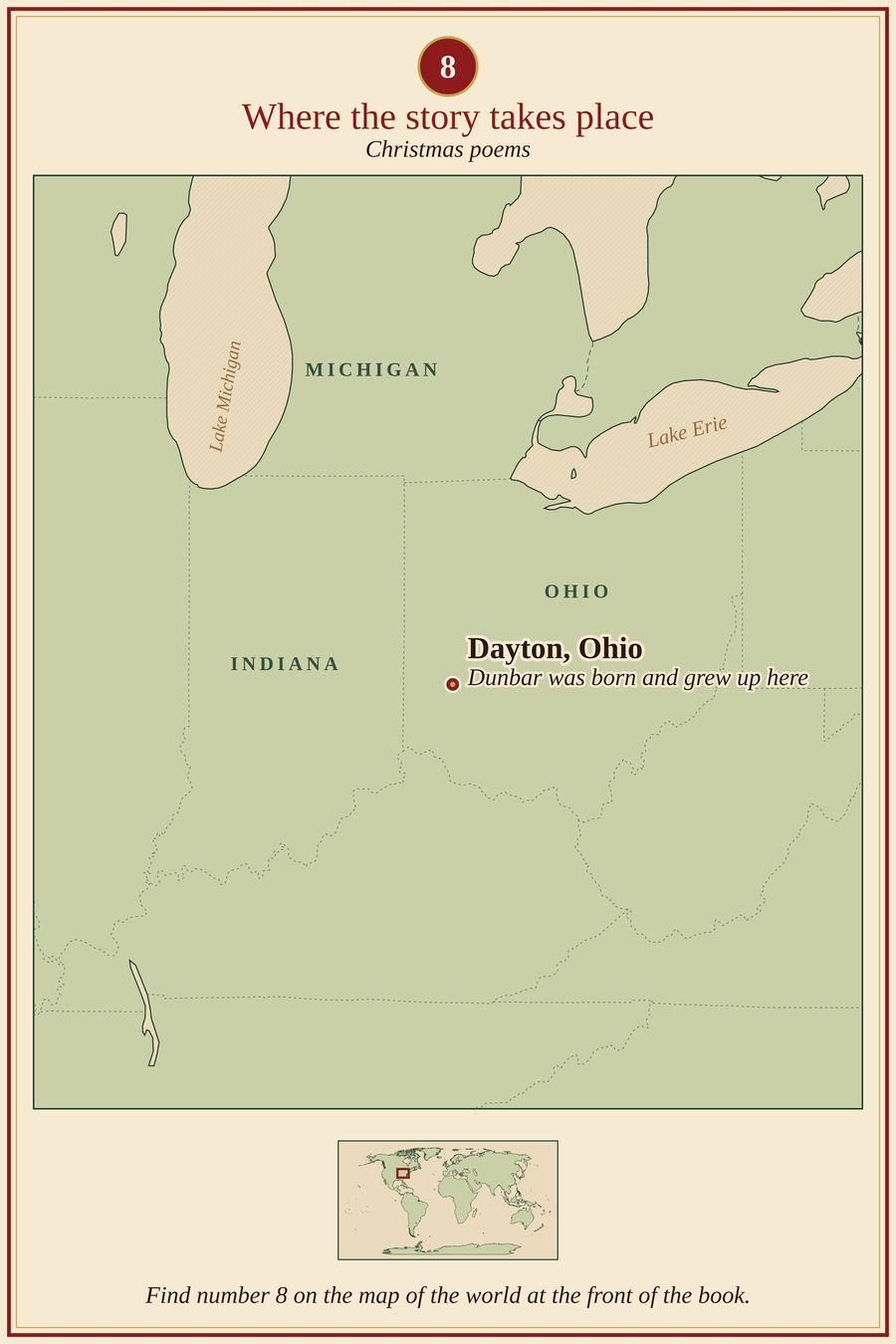
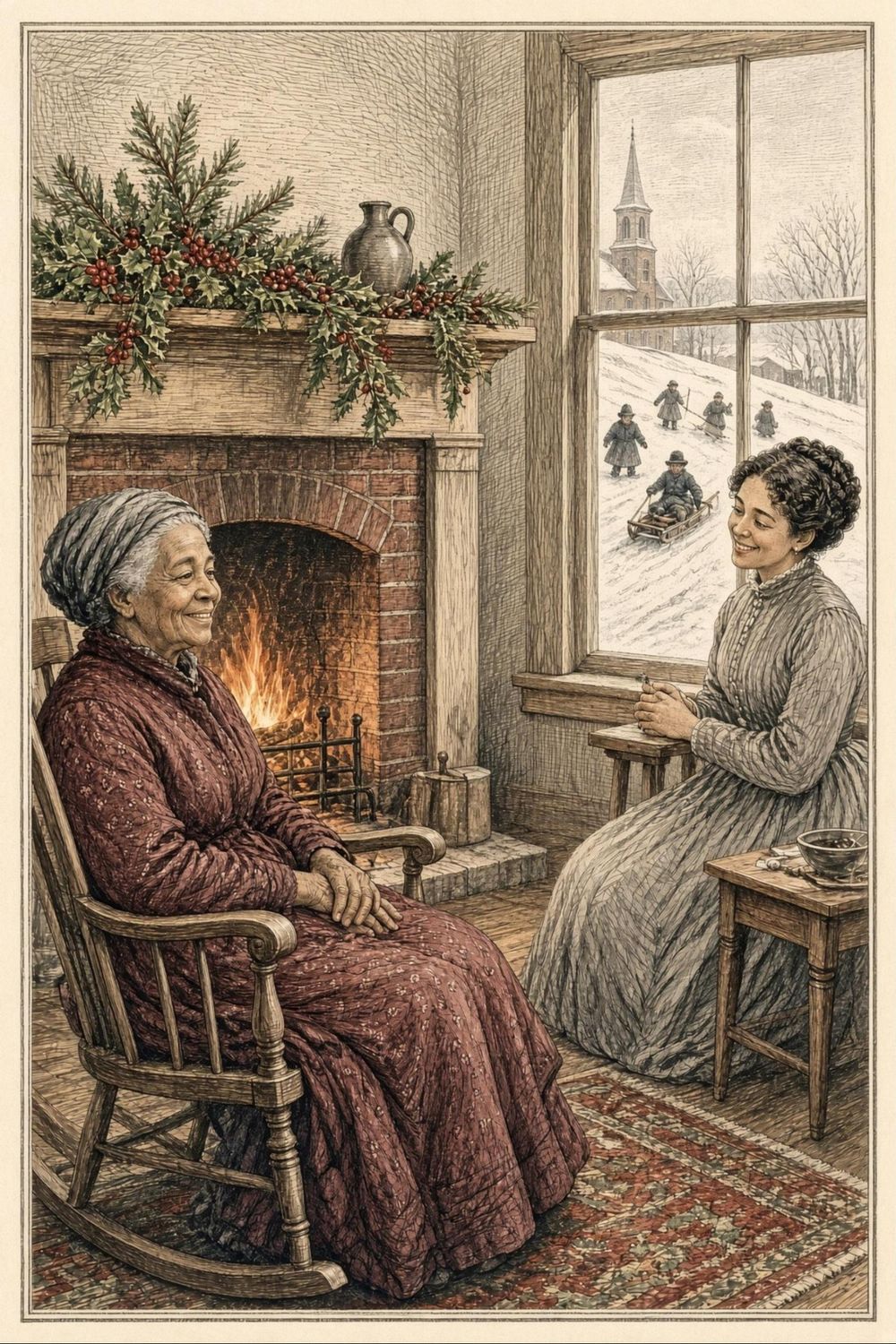
In the book, this chapter is printed in full with three notes beside the words they explain, its map, its city view and its illustration.